An NSF-supported collaborative project between Woods Hole Oceanographic Institution (WHOI) in the USA and the Marine Biological Association (MBA) in the UK.
CPR-BEAMS: Continuous Plankton Recorder - Based Ecological Analysis of Marine Systems

The Continuous Plankton Recorder (CPR) Survey and CPR-BEAMS
Since its inception in 1931, the Continuous Plankton Recorder (CPR) survey has become a globally recognized program for its long-standing and comprehensive oceanic plankton monitoring. The CPR survey provides vital data for understanding ocean ecosystems, and the CPR-BEAMS project focuses on three key objectives:
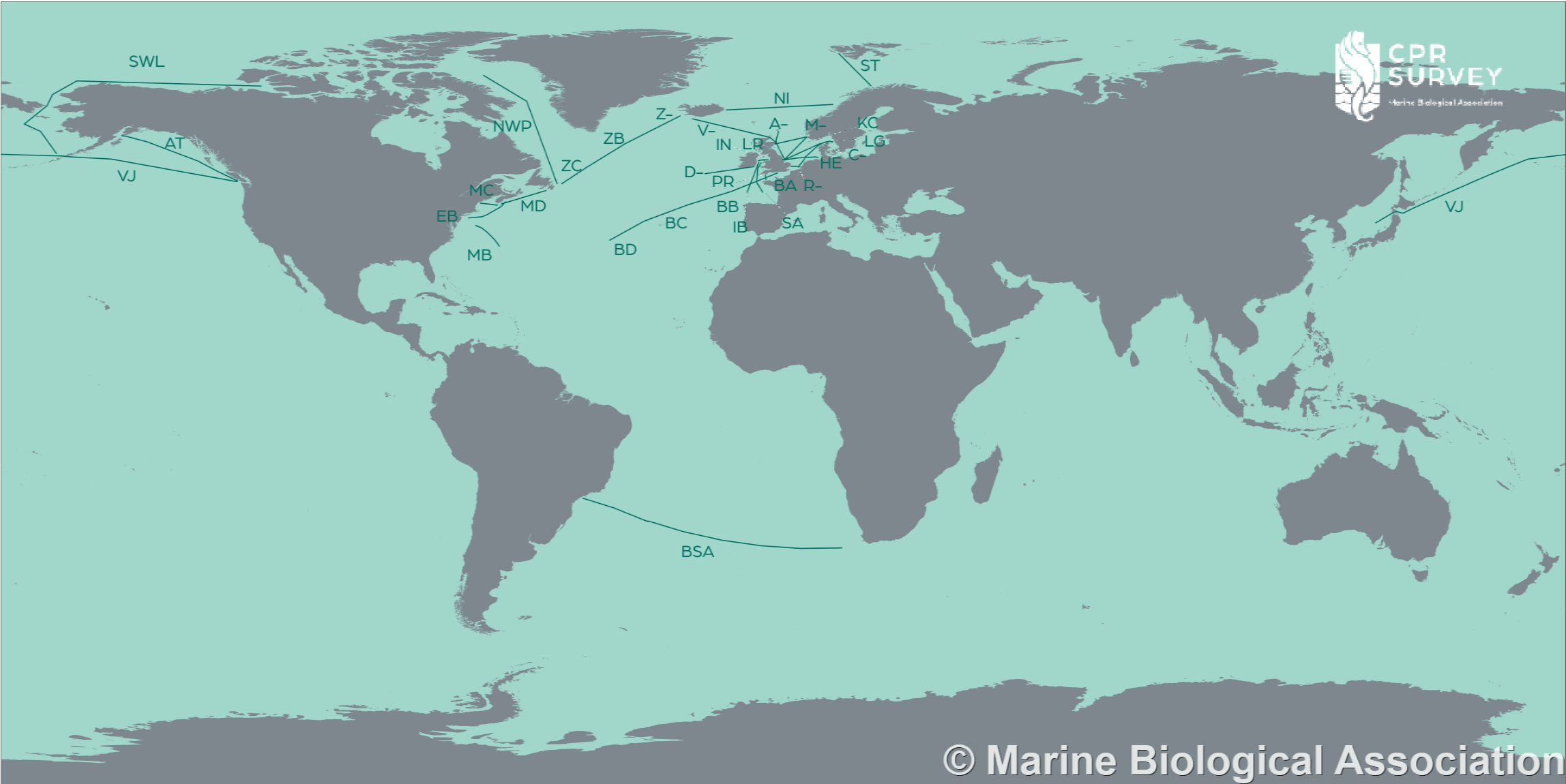
- Core Monitoring on the Z Route: The CPR survey continues to operate along the "Z route," from Iceland to the U.S. eastern seaboard. This route crosses climate-sensitive regions essential for studying fisheries, carbon cycling, and ecosystem changes. Supported by the NSF for over 17 years, the Z route is crucial for long-term environmental observations.
- Collaborative Research and Data Exploration: The project aims to form a working group that will bring together experts and new collaborators to explore the extensive CPR dataset. This group will meet annually to identify major research themes, leveraging the temporal data to investigate ecological changes in the Northwest Atlantic and beyond.
- Training and Outreach: The project will host workshops to train U.S. researchers on using CPR data. These workshops will focus on data access, analysis, and practical applications, empowering the next generation of ocean scientists.
Research & Monitoring Initiatives
Our research focuses on monitoring oceanic plankton and its relationship to climate change and marine ecosystems. Through our Core Monitoring on the Z route and global survey efforts, we provide valuable data that informs environmental policy and scientific discoveries.
Access Our Data
Explore decades of data collected from the CPR survey. Our dataset is available for use by researchers, policymakers, and the public. Leverage our interactive data visualizations and methodologies to understand marine biodiversity, climate impacts, and more.
Training & Educational Outreach
We are committed to empowering the next generation of marine researchers through our workshops and educational resources. Our outreach programs help bridge the gap between science and public understanding of ocean health.